Pages

Thursday, June 4, 2015

Baidu caught gaming recent supercomputer performance test

Chinese search engine giant Baidu recently made headlines when its supercomputer reportedly beat out challengers from both Google and Microsoft on the ImageNet image recognition test. However, the company has had to back down from those claims and issue an apology after details emerged suggesting that its success resulted from a scheme to cheat the testing system. As such, Baidu's accomplishment has been stricken from the books and the company has been banned from ImageNet challenges for a full year.

The issue began in Mid-May when Baidu claimed to have scored a record low 4.58% error rate on the test. This exam looks at how well computing clusters can identify objects and locations within photographs -- basically the technology behind Google Photo's auto-tagging feature -- except on large-scale file sets. Microsoft and Google, on the other hand scored 4.94 and 4.8 percent error rates, respectively. That's actually a bit better than the 5 percent average trained humans can achieve and a huge deal for the industry.

However on Tuesday, researchers who actually administered the ImageNet test called shenanigans on Baidu for setting up a series of dummy accounts to brute force a successful test run. The test rules state specifically that contestants are allowed to submit only two sets of test results each week. Baidu apparently set up 30 accounts and spammed the service with 200 requests in six months, 40 of which came over a single five-day period in March. Doing so potentially allowed Baidu engineers to artificially increase the recognition rate by "tuning" their software to the existing test data sets.

"This is pretty bad, and it is exactly why there is a held-out test set for the competition that is hosted on a separate server with limited access," Matthew Zeiler, CEO of AI software company Clarifai, told the Wall Street Journal. "If you know the test set, then you can tweak your parameters of your model however you want to optimize the test set."

In response, Baidu has issued a formal apology for its actions. If, you think apology is a good description for calling the incident a "mistake" and refusing to provide any additional details or explanation as to why it happened.
Read More

Wednesday, June 3, 2015

Fail: Computerized Clinical Decision Support Systems for Medical Imaging

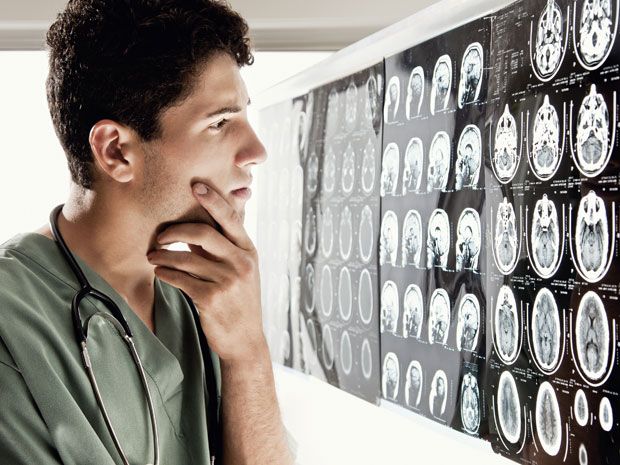
Computerized systems that help physicians make clinical decisions fail two-thirds of the time, according to a study published today in the Journal of the American Medical Association (JAMA). With the use of such systems expanding—and becoming mandatory in some settings—developers must work quickly to fix the programs and their algorithms, the authors said. The two-year study, which is the largest of its kind, involved over 3,300 physicians. 

Computerized clinical decision support (CDS) systems make recommendations to physicians about next steps in treatment or diagnostics for patients. The physician enters information about the patient and the ailment, and based on a database of criteria, algorithms come up with a score for how appropriate certain next clinical steps would be. These databases of “appropriateness criteria” have been developed by national medical specialty societies and are used across various CDS systems. They aim to reduce overuse of care that can be costly and harmful to patients

But according to the JAMA study, the leading CDS systems don’t work most of the time. The study tracked more than 117,000 orders input by physicians for advanced diagnostic imaging procedures such as magnetic resonance imaging (MRI) and computed tomography (CT). For two-thirds of those orders, the computer program could not come up with any feedback. “Basically it says, ‘I don’t have a guideline for you. I can’t help you,’” says Peter Hussey, a senior policy researcher at RAND Corporation and the lead author of the study. “When that happens two-thirds of the time...the physicians start to get more negative about it.”

That’s a problem, because these computerized decision makers will soon be mandated by the U.S. federal government. The Protecting Access to Medicare Act of 2014 says that, starting in 2017, CDS systems must be allowed to weigh in on whether advanced diagnostic imaging should be ordered for Medicare patients. CDS systems are already used in the private sector as well, but not widely, Hussey says.   

The systems’ problems are likely caused by lackluster databases and algorithms that fall short, says Hussey. “There are lots of different kinds of patients with different problems, and the criteria just haven’t been created for some of those. In other cases, it’s likely that the criteria were out there but the CDS tools couldn’t find them,” he explains. “These seem like solvable problems, but we need to get working on this pretty quickly becaue this is going to be mandatory in a couple of years.”

Read More

Highly Custom Robot

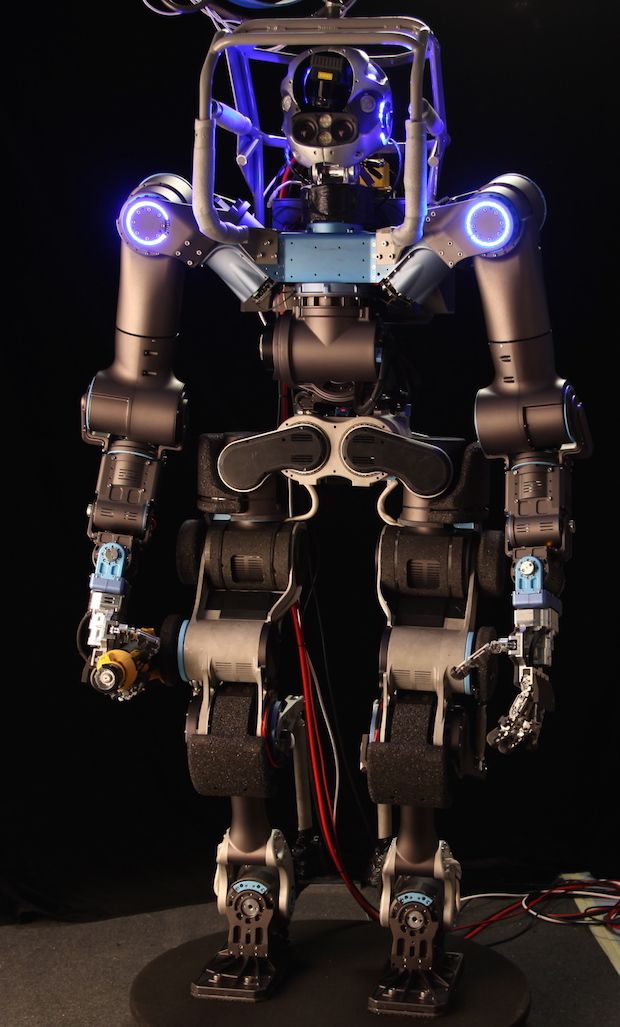
While some DRC teams received fancy ATLAS robots from DARPA and other teams decided to adapt existing platforms (HUBO and HRP-2, for example) to compete in the Finals, some groups set out to build completely new robots. One of these is Team WALK-MAN from the Italian Institute of Technology (IIT), whose most recent robotic creations include HyQ and COMAN. Before departing to the DRC Finals site in Pomona, Calif., Nikos Tsagarakis, a senior researcher at IIT and WALK-MAN Project Coordinator, spoke with us about his team’s highly customized robot, its mains capabilities, and how it compares to ATLAS.

To design and build WALK-MAN, did you get inspiration from other robots? Which ones?

WALK-MAN was developed as part of the European Commission-funded Project WALK-MAN, and the goal was creating a completely original and new body design, so it is different from any other existing robot we developed so far at IIT. Apart from following our traditional approach to soft robot design by adding joint elasticity to the robot’s joints, WALK-MAN’s hardware is 100 percent new. Its main features include the use of custom designed high-power motor drives able to deliver several kilowatts of peak power at a single joint. We also optimized the design of its body to reduce the inertia and mass and improve the dynamic performance of the robot. A rich sensory system gives us the state of the robot in terms of loads (joint torque sensing) and thermal sensing/fatigue for both the actuators and the electronics. In terms of control, WALK-MAN drives can be controlled in different modes including position, torque, and impedance at rates up to 5 kHz.

How does WALK-MAN compare to ATLAS?

The two robots differ in their actuation system (WALK-MAN is an electrical motor driven robot while ATLAS is a hydraulic system) but are very similar in certain dimensions like height (1.85 m) and shoulder distance (0.8 m). WALK-MAN is lighter (120 kg with backpack) than Atlas (around 180 kg). In terms of capabilities, WALK-MAN joint performance is very close to ATLAS joints. Leg joints can produce torques up to 320 Nm and reach velocities of 11 to 12 radians per second at torques as high as 250 Nm. WALK-MAN arms have more extensive range and can generate torques up to 140 Nm at the shoulder level. We also expect to be a more efficient robot than ATLAS and able to operate for more prolonged periods without recharging.


Read More

Facebook uses deep learning as a way of recognizing images on its social network

open-source-plus-canvas-STORY

FACEBOOK IS OPENING a new artificial intelligence lab in Paris after building a dedicated AI team that spans its offices in New York and Silicon Valley.

The New York University professor who oversees the company’s AI work, Yann LeCun, was born and educated in Paris. LeCun tells WIRED that he and the company are interested in tapping the research talent available in Europe. Alongside London, he says, Paris was an obvious choice for a new lab. “We plan to work openly with and invest in the AI research community in France, the EU, and beyond,” he wrote in a blog post announcing the move.

LeCun is one of the researchers at the heart of an AI movement known as deep learning. Since the 1980s, he and a small group of other researchers have worked to build networks of computer hardware that approximate the networks of neurons in the brain. In recent years, the likes of Facebook, Google, and Microsoft have embraced these “neural nets” as a way of handling everything from voice and image recognition to language translation.

Another researcher who bootstrapped this movement, University of Toronto professor Geoff Hinton, is now at Google. Like Facebook, Google is investing heavily in this rapidly evolving technology, and the two companies are competing for a rather small talent pool. After acquiring a deep learning startup called DeepMind, based in the UK and founded by an English researcher named Demis Hassabis, Google already operates a European AI lab of sorts.

Chris Nicholson, founder of the San Francisco-based AI startup Skymind, points out the many of the key figures behind deep learning are European, including not only LeCun, Hinton, and Hassabis, but also University of Montreal professor Yoshua Bengio (though he was educated in Canada). “All of them are now employed by North American organizations,” Nicholson says. “There are a lot of investment gaps in European venture capital, which means that Europe has a lot of ideas and people that either come to America or never make an impact on the mainstream.”

Today, Facebook uses deep learning as a way of recognizing images on its social network, and it’s exploring the technology as a means of personalizing your Facebook News Feed so that you’re more likely to enjoy what you see. The next big step, LeCun says, is natural language processing, which aims to give machines the power to understand not just individual words but entire sentences and paragraphs.

Article From http://www.wired.com/2015/06/facebook-opens-paris-lab-ai-research-goes-global/

From Captions to Visual Concepts and Back

Hao Fang, Saurabh Gupta, Forrest Iandola, Rupesh Srivastava, Li Deng, Piotr Dollar, Jianfeng Gao, Xiaodong He, Margaret Mitchell, John Platt, Lawrence Zitnick, and Geoffrey Zweig
June 2015

Abstract

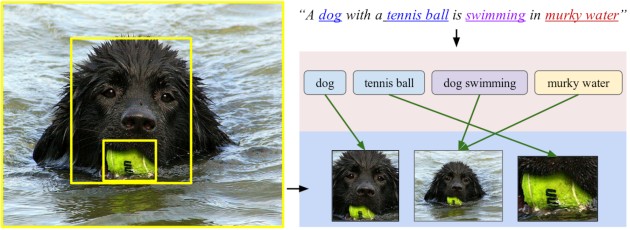
This paper presents a novel approach for automatically generating image descriptions: visual detectors, language models, and multimodal similarity models learnt directly from a dataset of image captions. We use multiple instance learning to train visual detectors for words that commonly occur in captions, including many different parts of speech such as nouns, verbs, and adjectives. The word detector outputs serve as conditional inputs to a maximum-entropy language model. The language model learns from a set of over 400,000 image descriptions to capture the statistics of word usage. We capture global semantics by re-ranking caption candidates using sentence-level features and a deep multimodal similarity model. Our system is state-of-the-art on the official Microsoft COCO benchmark, producing a BLEU-4 score of 29.1%. When human judges compare the system captions to ones written by other people on our held-out test set, the system captions have equal or better quality 34% of the time.

CVPR15_3steps

http://research.microsoft.com/en-us/projects/image_captioning/

Friday, May 22, 2015

MPEG’s Compact Descriptors for Visual Search (CDVS)

Recently, I found these new documents regarding the MPEG-7 - Multimedia Content Description Interface

Past decades have seen an exponential growth in usage of digital media. Early solutions to the management of these massive amounts of digital media fell short of expectations, stimulating intensive research in areas such as Content Based Image Retrieval (CBIR) and, most recently, Visual Search (VS) and Mobile Visual Search (MVS).

The field of Visual Search has been researched for more than a decade leading to recent deployments in the marketplace. As many companies are coming up with proprietary solutions to address the VS challenges, resulting in a fragmented technological landscape and a plethora of non-interoperable systems, MPEG introduces a new worldwide standard for the VS and MVS technology.

MPEG’s Compact Descriptors for Visual Search (CDVS) aims to standardize technologies, in order to enable an interoperable, efficient and cross-platform solution for internet-scale visual search applications and services.

The forthcoming CDVS standard is particularly important because it will ensure interoperability of visual search applications and databases, enabling high level of performance of implementations conformant to the standard, simplifying design of descriptor extraction and matching for visual search applications. It will also enable low complex, low memory hardware support for descriptor extraction and matching in mobile devices and sensibly reduce load on wireless networks carrying visual search-related information. All this will stimulate the creation of an ecosystem benefiting consumers, manufacturers, content and service providers alike.